
What is seo
What Is SEO? A Complete Beginner’s Guide to Search Engine Optimization
Introduction
In today’s digital world, having a website is not enough to grow a business online. People need to find your website when they search for products, services, or information on Google. This is where Search Engine Optimization (SEO) becomes important. SEO helps businesses improve their online visibility, attract relevant visitors, and build a strong digital presence. Whether you own a small business, manage a website, or work in digital marketing, understanding SEO is essential for long-term online growth.
What Is SEO
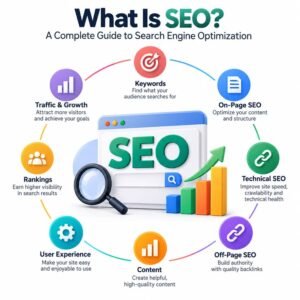
SEO stands for Search Engine Optimization. It is the process of improving a website to increase its visibility in the organic, or unpaid, results of search engines such as Google and Bing. The main goal of SEO is to help search engines understand website content and help users find useful information that matches their search queries.
For example, when someone searches for “best digital marketing strategist in Kannur,” Google displays pages that it considers relevant and useful. By creating quality content, optimizing website pages, improving technical performance, and building website credibility, businesses can improve their chances of appearing in relevant search results. However, SEO does not guarantee a specific ranking because search results depend on several factors.
Why Is SEO Important?
SEO is an important part of digital marketing because it helps businesses connect with people who are actively searching for their products or services. A well-optimized website can attract relevant organic traffic without paying for every click.
SEO can also help businesses build trust, improve the user experience, and increase brand awareness. Unlike some short-term advertising campaigns, effective SEO work can continue attracting visitors over time. However, results usually require consistent effort, monitoring, and improvements.
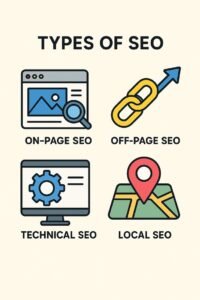
What Are the Main Types of SEO?
1. On-Page SEO
On-page SEO focuses on optimizing individual website pages and their content. It includes using relevant keywords naturally, writing descriptive title tags and meta descriptions, organizing content with headings, optimizing images, and adding useful internal links. High-quality, helpful content is essential because it answers users’ questions and provides value.
2. Off-Page SEO
Off-page SEO involves activities outside your website that can improve its reputation and authority. Earning relevant, trustworthy backlinks from other websites is one important example. Creating valuable content that people want to reference and building genuine industry relationships can help attract these links. The focus should be on quality rather than collecting large numbers of low-quality backlinks.
3. Technical SEO
Technical SEO helps search engines discover, crawl, and index your website effectively. It includes improving website speed, ensuring mobile usability, fixing broken links, managing duplicate content, using structured data where appropriate, and creating XML sitemaps. A technically sound website helps search engines access its important pages and gives visitors a better experience.
4. Local SEO
Local SEO helps businesses improve their visibility in searches related to a specific location. For example, a digital marketing professional serving Kannur can optimize their website content, maintain an accurate Google Business Profile, and provide consistent business information across relevant directories. Local SEO helps nearby customers discover suitable services when they need them.
How Does SEO Work?
SEO works by helping search engines understand website pages and determine how relevant they are to users’ searches. Search engines generally discover pages through crawling, organize information through indexing, and display relevant pages in search results using ranking systems.
To improve a website’s SEO, marketers begin with keyword research to understand what their target audience searches for. They then create useful content, optimize page titles and headings, improve website structure, and address technical issues. Earning quality backlinks and improving the overall user experience can also support SEO performance.
Tools such as Google Search Console and Google Analytics help website owners monitor search visibility, organic traffic, user engagement, and conversions. These insights make it easier to identify problems and improve the website over time.
What Are the Benefits of SEO?
SEO offers several benefits for businesses and website owners. It can increase organic website traffic, improve online visibility, and help attract visitors who are genuinely interested in particular products or services. SEO can also support brand credibility, improve website usability, and generate potential leads.
For small businesses, especially those serving a local area, SEO can provide an opportunity to compete online by targeting relevant searches and publishing useful information. Although SEO does not produce guaranteed or immediate results, a consistent strategy can support sustainable business growth.
Common SEO Mistakes to Avoid
Some common SEO mistakes include keyword stuffing, publishing duplicate or low-quality content, ignoring mobile users, using misleading page titles, and building spammy backlinks. Neglecting technical problems and failing to monitor website performance can also limit results.
Instead, focus on creating original, helpful content, using keywords naturally, improving page speed, organizing website pages clearly, and following search engine guidelines. SEO should always prioritize the needs of real users.
Conclusion
SEO is a valuable digital marketing strategy that helps websites improve their visibility in search engines and connect with relevant audiences. By combining on-page SEO, off-page SEO, technical SEO, and local SEO, businesses can build a stronger online presence and attract potential customers.
If you want to improve your website’s search visibility, working with a digital marketing strategist in Kannur can help you develop an SEO strategy suited to your business goals. With consistent optimization, useful content, and regular performance analysis, SEO can become an important part of long-term digital growth.